
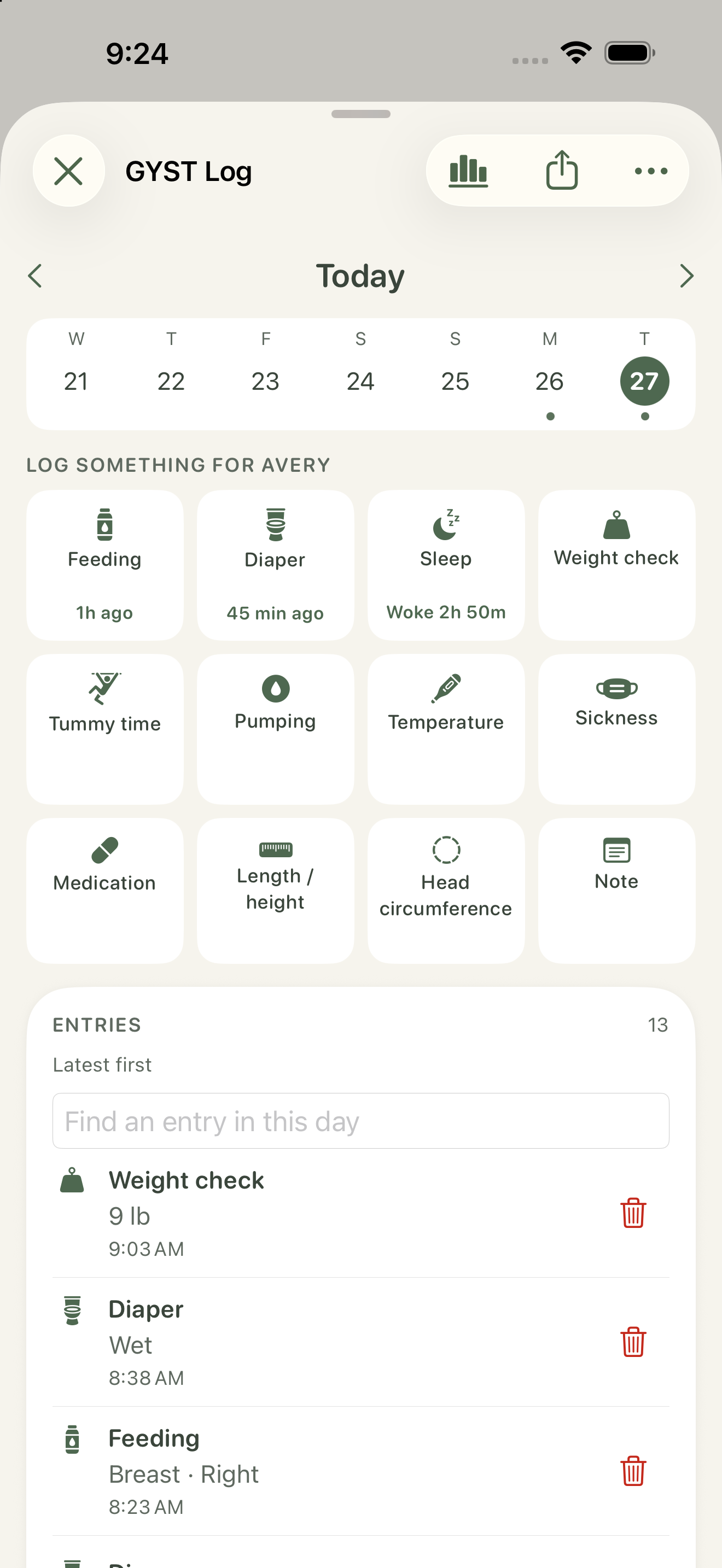
Start with a small set of details
Choose a notebook or an app you can reach easily. Write down the date, time, activity and a short note when it adds context. A simple entry is easier to look back at than a long description written hours later.
A sample log entry
For example: “Tuesday, 2:15 p.m. — bottle feed — question for next visit: how should we record amounts?” This is fictional organizational data, not a suggested feeding time or amount. Use the units and details your own provider asks for.
Keep activities distinct
Use separate labels for feeding, sleep and diapers so you can find the detail you need. For timed activities, note the start and end when useful. Record what happened rather than trying to fit your baby into a target in an app.
Make room for uncertainty
If you missed a time, mark it approximate instead of guessing precisely. If two people help, agree who will record the entry and how you will check for duplicates. A shared routine does not require a perfect record.
Bring context to appointments
Choose the date range you want to discuss, write your main question, and note gaps in your record. The free visit worksheet can hold the questions you want answered. A log is background for a conversation, not a diagnosis.
How GYST Baby fits
GYST Baby brings daily logging, Guides and Calendar together from pregnancy through toddler life. The optional one-time Unlock adds one-tap logging and shared or printed reports, with free previews. The app supports English and Spanish; this resource is in English.
Keep your next chapter together
Free U.S. download. Optional $0.99 one-time Unlock. No subscription.
This resource helps organize everyday notes and conversations. It is not medical advice. For a health concern, contact your care team; do not wait for a scheduled appointment because of an app or worksheet.